
Why I started “Men in Nursing”
When I began working as a nursing educator, one thing quickly became apparent: male nursing students were present in the classroom, but often absent from conversations about belonging, identity, and support. Many blended in quietly, some struggled visibly, and a few disappeared from the programme altogether.
At my university, this concern is not anecdotal. We face persistent dropout challenges, and male nursing students leave the programme at roughly double the rate of female students. This pattern is reflected in both national statistics and international research and raises urgent questions about how nursing education environments are experienced by those who are numerically in the minority.
The project Men in Nursing emerged from a simple but pressing question:
What happens when a group is numerically small, socially visible, yet structurally invisible?
Rather than framing men as a “problem” in nursing education, the project was designed to explore how learning environments, professional narratives, and clinical cultures shape students’ sense of belonging, and how intentional, inclusive measures can support retention and professional identity formation.
What research tells us about being a male nursing student
International research consistently shows that male nursing students navigate a complex terrain of expectations, stereotypes, and contradictions.
Studies describe how men in nursing often encounter:
- Gender stereotyping and role incongruence
- Questioning of their motives for choosing nursing
- Marginalisation in clinical placements
- Limited access to role models and peer support
Prosen and Čekada (2025) demonstrate that nursing students themselves view gender imbalance as a structural challenge to the healthcare workforce. Male students are often positioned as exceptions rather than as fully legitimate members of the profession.
Qualitative studies further show that clinical placements can be particularly challenging for male nursing students, who may feel scrutinised, isolated, or uncertain about how to enact care in gendered contexts (Zhou et al., 2024; Tian et al., 2025). Norwegian research confirms similar patterns, especially during the first year of study, when professional identity is still fragile and under construction (Kambe et al., 2024).
From research to practice: the “Men in Nursing” project
Men in Nursing was developed as a pedagogical and relational initiative, not a recruitment campaign or branding exercise. The core aim has been to strengthen belonging, peer support, and professional identity among male nursing students, without reinforcing stereotypes or creating exclusion.
The project is formally supported through institutional strategy funding, reflecting a clear commitment to diversity, student retention, and educational quality. This strategic anchoring has been essential, both practically and symbolically.
In practice, the project includes several concrete measures:
- Intentional group composition from the first day of study.
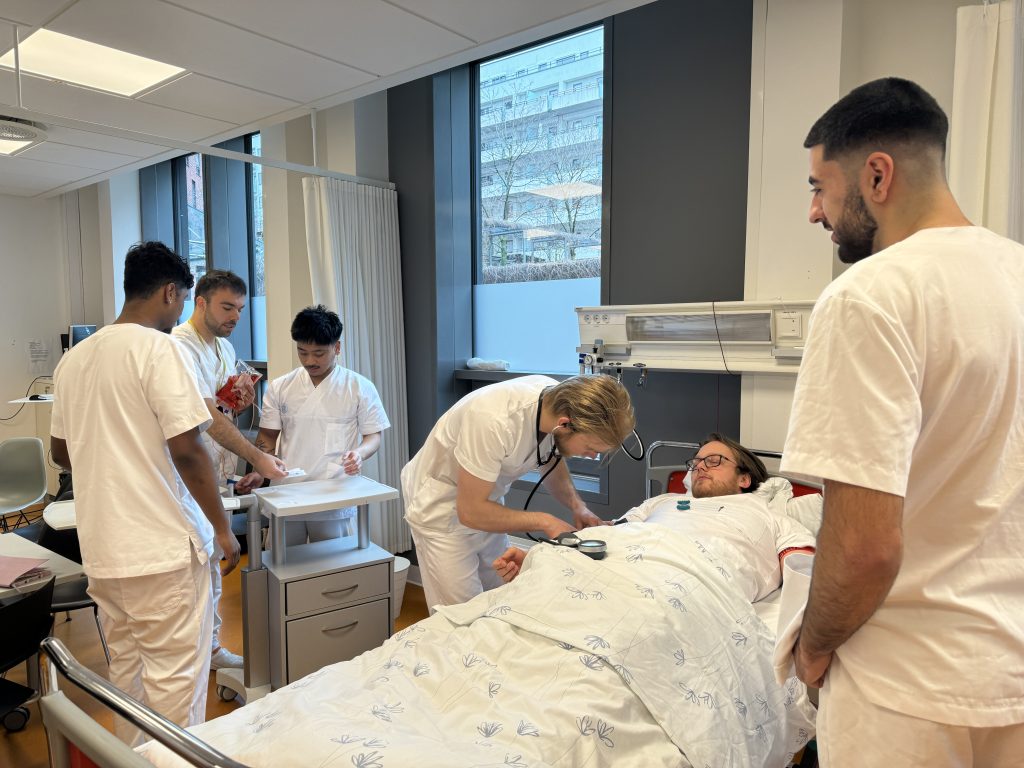
On the very first day, students are placed into core study groups of approximately 15 students (Photo 1). In these groups, we intentionally ensure that around half of the students are male, even though this means that some other groups consist entirely of female students. Research suggests that minority students benefit from not being isolated, and our experience confirms that male students participate more actively and visibly when they are not alone (Han et al., 2025; Tian et al., 2025). - Regular gatherings that combine professional reflection and social belonging.
We organise monthly “pizza and discussion” evenings where students from different year groups and campuses meet to share clinical experiences, reflect on challenges, and connect informally. These low-threshold arenas have proven crucial for building trust and peer support. - Student-initiated social and learning activities.
Activities are often suggested by the students themselves and have included paintball outings, movie nights, and hands-on learning experiences such as pig heart dissections. These activities strengthen peer bonds while reinforcing professional identity in a supportive environment. - Exposure to diverse male role models.
Male nurses from different specialties are invited to share their career paths, challenges, and motivations. This helps students see that there is no single way to “be” a male nurse and counters narrow or stereotypical representations of the profession.
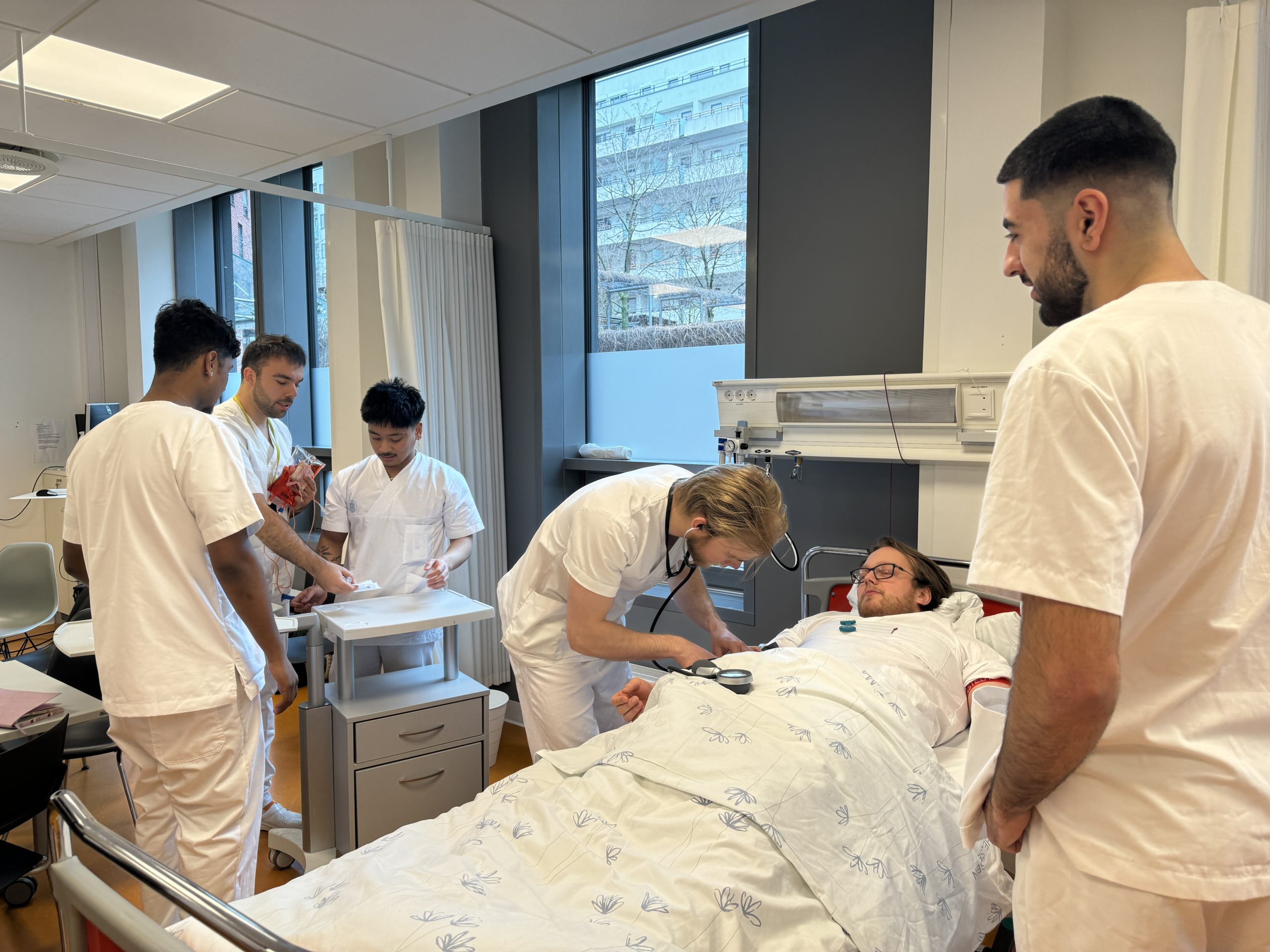
Photo 1: Nursing Students Practicing Patient Care (Source: Authors personal archive)
A new intervention: staying together in the first clinical placement
Building on both research and student feedback, we are now piloting a new intervention within the project.
For students’ first clinical placement in nursing homes, we asked male nursing students whether they would like to be placed together at one specific nursing home. The nursing home offered 16 placement positions, and it took less than one day to fill all of them, all with male students who volunteered to participate.
An important element of this intervention is continuity and support. The students will have me as a nursing educator throughout the placement. While this means they will have a male teacher, the clinical context still reflects a broader structural challenge: nursing homes in Norway have very few male nurses and some have none. Most male nurses work in hospitals rather than in long-term care settings, resulting in a persistent lack of visible male role models in nursing homes.
This tension is precisely why the intervention is relevant. Even in the absence of male clinical role models, we aim to explore whether being placed together, maintaining peer continuity, and strengthening networks can enhance students’ sense of belonging, motivation, and professional identity. We will evaluate whether this collective placement approach influences students’ experiences, learning outcomes, and willingness to continue their studies, and potentially consider nursing homes as a future workplace.
Professional identity as a relational process
Professional identity does not develop in isolation. It is shaped through interaction, recognition, and shared narratives.
Han et al. (2025) describe how male nursing students often shift between different “professional identity personas” depending on context and expectations. This constant adjustment can be demanding, particularly when students feel they must continually justify their presence in the profession.
What Men in Nursing has made visible is how small, intentional structural changes, such as group composition, collective placements, and safe peer spaces, can ease this identity work. These insights align closely with transcultural nursing perspectives, which emphasise context, reflexivity, and power relations rather than fixed identity categories.
Why this matters beyond gender
While Men in Nursing focuses on gender, the lessons extend far beyond men.
The project has highlighted how:
- Minority positions in education create specific support needs
- Silence and withdrawal are often misinterpreted as lack of motivation
- Informal peer networks are crucial for retention
- Inclusion requires intentional design, not just good intentions
These insights are directly relevant to transcultural nursing education more broadly, where students may navigate language barriers, migration histories, racialisation, or other minority positions.
Supporting diversity in nursing education is not about treating everyone the same — but about recognising different starting points, risks, and resources.
Challenges and critical reflections
Of course, we’ve faced challenges. One is that some colleagues worry we’re giving male students special treatment or excluding others. But as we know from both research and practice, promoting equity often means giving different kinds of support to different groups.
We also face the challenge of motivating students to participate consistently, as sometimes they take these opportunities for granted or have other commitments.
Targeted initiatives inevitably raise questions:
Do they reinforce difference?
Do they exclude others?
Do they oversimplify identity?
These concerns are legitimate. In Men in Nursing, we address them through transparency, evaluation, and ongoing reflection. Promoting equity often means offering different kinds of support to different groups, particularly when data clearly show unequal outcomes, such as significantly higher dropout rates among male students.
Inclusion must remain dynamic, evidence-informed, and open to critique.
Still, we believe that creating these supportive spaces is crucial. By fostering a sense of community and addressing issues like microaggressions and stereotypes, we’re helping male students feel that they truly belong in the nursing profession.
Looking ahead: a call to action
If nursing education is to meet future healthcare needs, diversity cannot be an afterthought. Gender diversity, like cultural diversity, strengthens the profession by expanding perspectives, skills, and relational capacity.
I invite educators, researchers, and policymakers to ask:
- Who feels at home in our programmes — and who does not?
- Which students receive informal support, and which do not?
- How do our educational structures signal belonging from the very first day?
Transcultural nursing reminds us that care is always contextual. So is education. Creating space for belonging is not a “special measure”. It is a core educational responsibility.
References
Prosen, M., & Čekada, T. (2025). Nursing students’ views on men in nursing: A gender diversity challenge in the healthcare workforce. BMC Nursing, 24, 820. https://doi.org/10.1186/s12912-025-03521-y
Zhou, Y., Weng, L., Wang, M., & Huang, G. (2024). Male nursing students’ experiences of their clinical internships: A qualitative study. Heliyon, 10(10), e31075. https://doi.org/10.1016/j.heliyon.2024.e31075
Tian, J., Gu, W., Ren, X., Li, H., Teng, M., & Zheng, H. (2025). Clinical practice experience of male nursing students and nurses: A systematic review and qualitative meta-synthesis. Nurse Education in Practice, 89, 104621. https://doi.org/10.1016/j.nepr.2025.104621
Han, X., Duan, Y., Hong, S., et al. (2025). Tailored professional identity personas of male undergraduate nursing students. BMC Nursing, 24, 1143. https://doi.org/10.1186/s12912-025-03809-z
Kambe, M., Røthing, M., & Dahl, H. (2024). Being a male nursing student: Experiences in the first year of study. Sykepleien Forskning, 19, e-94433. https://doi.org/10.4220/Sykepleienf.2024.94433en