A nurse can arrive at a new hospital with many years of experience and still feel uncertain. Not because the nurse has forgotten how to care, but because the system around them is unfamiliar: who to call, when to escalate, how to document, what is expected during multidisciplinary rounds, how families are involved, and how patients’ cultural or religious preferences are addressed.
I have seen this many times as Program Director of the Sheikh Shakhbout Medical City Nurse Fellowship Program in Abu Dhabi. Our fellows are experienced nurses who often come from different countries, healthcare systems, and professional cultures. They bring knowledge, resilience, maturity, and valuable clinical experience. The question is not whether they know how to nurse. The real question is how we help them bring that experience safely and confidently into a new organisational and cultural environment.
For me, this is where nursing education becomes more than teaching. It becomes listening, guiding, supporting, and helping people feel that they belong.
Experienced, but still in transition
One of the most important lessons we have learned is that experience and familiarity are not the same. A nurse may be clinically excellent but unfamiliar with a new electronic health record, medication system, escalation pathway, or documentation standard. Another may come from a healthcare environment where questioning a senior colleague was discouraged. Someone else may be accustomed to a different level of professional autonomy or a different way of working with physicians, pharmacists, and allied health professionals. These differences should not be viewed as weaknesses. They are normal features of moving between organisations, countries, and healthcare cultures.
Although every fellow has a different transition experience, research involving internationally educated nurses reflects many of the challenges we observe in practice. Communication, recognition of previous experience, workplace relationships, mentorship, and adaptation to an unfamiliar professional culture can influence how confidently nurses integrate into a new setting (Rajpoot et al., 2024; Shiju et al., 2024).
This is why I do not believe that experienced nurses need only a brief orientation and a folder of policies to read and comply with. They need time, trusted relationships, respectful feedback, and the confidence to say, “I do not understand this process yet,” without feeling that their competence is being judged.
Our fellowship is an ANCC Practice Transition Accreditation Program-accredited, nine-month RN fellowship. Its purpose is not to ask nurses to forget what they learned before joining us. It is to help them connect their existing knowledge with our systems, standards, values, and patient population (American Nurses Credentialing Center, 2025).
I have found that people learn better when they feel respected. The message should never be, “Everything you did before was wrong.” It should be, “We value what you bring. Let us show you how practice works here, and let us learn from one another.”
What our diverse team has taught us
Although I am accountable for the programme as Program Director, the fellowship is not the work of one person. I am supported by a Program Leadership Team that contributes to governance, evaluation, stakeholder engagement, and continuous improvement. Clinical Resource Nurses from different specialties continue supporting fellows in practice. They clarify processes, reinforce competencies, explain workflows, and help nurses understand why a situation may be managed differently from what they experienced elsewhere.
Preceptors, mentors, educators, unit managers, peers, and interprofessional colleagues also contribute. Learning how an organisation really works—its expectations, relationships, and unwritten ways of doing things—does not happen during one workshop. It develops gradually through repeated experiences and trusted relationships.
Our Nursing Education team represents nine nationalities and three faith traditions. This brings different experiences of nursing, education, communication, religion, leadership, and professional adaptation into our work.
Some of us know personally what it means to enter a new country and learn an unfamiliar healthcare system. We understand the courage it can take to ask a question when everyone around you appears confident. We understand how difficult it may be to express yourself in a second language or adjust to a different way of receiving feedback.
However, diversity does not automatically make us culturally competent. It gives us an opportunity, but it also gives us a responsibility.
We must listen carefully, challenge our assumptions, and avoid interpreting someone’s behaviour only through nationality, culture, or religion. Silence may reflect respect for hierarchy rather than lack of knowledge. Hesitation may reflect fear of being judged rather than lack of confidence. A nurse who communicates confidently may still be uncertain about a local process.
What we have learned is simple but important: we need to understand the person before we interpret the behaviour.This is also how I understand person-centred practice. We must see the patient as a whole person, but we must also see the nurse as a person—with experience, values, concerns, and a need to feel respected and supported. When nurses feel valued and safe to speak, they are better able to offer the same dignity and respect to patients and families (McCormack & McCance, 2017).
This reflects one of my strongest personal beliefs. Every person deserves respect, including respect for their culture, religion, beliefs, and individual choices. Respect does not mean agreeing with every practice. It means listening without judgement and responding with dignity, honesty, and kindness.

From learning the system to safer care
For me, the connection between transition support and patient safety is direct and clear.
Patient safety depends not only on what nurses know clinically, but also on whether they understand how to communicate concerns, escalate deterioration, document accurately, use organisational systems, and seek help when something is unfamiliar.
An experienced nurse may recognise that a patient is deteriorating but still be unsure about the local escalation pathway. Another may identify a medication concern but hesitate to challenge a senior professional because of previous workplace expectations.
Through preceptors, Clinical Resource Nurses, mentors, charge nurses, and unit managers, fellows learn how care is coordinated and how their nursing judgement contributes to team decisions.
Over time, we came to describe our approach in four simple words: explain, expand, engage, and embed. We explain the organisation’s values and safety expectations, expand knowledge where local practice differs, engage fellows with the people who can support them, and embed learning through clinical practice, reflection, competency development, and evidence-based work.
This also helps nurses work confidently across professions. Nurses arriving from different healthcare systems may have experienced different approaches to hierarchy, autonomy, and decision-making. The fellowship helps them understand how to communicate with physicians, pharmacists, allied health professionals, interpreters, spiritual-care representatives, and patient-experience teams.
Supporting nurses to adapt across cultures is therefore not only about helping them settle into the workforce. It also influences how safely and respectfully they care for patients whose beliefs, language, family roles, and expectations may differ from their own.
Respecting culture is part of patient safety
The UAE is a meeting point of many cultures. Tolerance and coexistence are national priorities, but in healthcare these values become real through daily actions: how we welcome colleagues, listen to patients, and respond to beliefs or preferences that may differ from our own (United Arab Emirates Government, 2024).
Respecting culture does not mean making assumptions based on nationality or religion. Two patients from the same country may have completely different beliefs, family structures, and preferences.
It means asking.
A simple question can change the quality of care:
“Are there any cultural, religious, language, or family preferences that we should consider while planning your care?”
The answer may involve language support, prayer, fasting, food practices, clothes preferences, family involvement, beliefs about pain, or expectations surrounding serious illness and end-of-life care.
Respecting culture does not mean accepting every request without considering clinical safety. It means listening, explaining risks clearly, and working with the patient, family, and wider healthcare team to find the safest and most respectful plan.
The nurse may be the first person to recognise the concern. The wider team then helps translate that understanding into action.
What I believe we have learned
Our programme data are encouraging. The most recent ANCC annual report showed 92% retention at 12 months and more than 91% at 24 months (American Nurses Credentialing Center, 2025). These figures do not prove that the fellowship alone caused nurses to stay. Retention is influenced by many personal, professional, and organisational factors.
They do, however, reassure us that sustained transition support has taken place alongside positive workforce outcomes. In the future, I would also like us to examine fellows’ sense of belonging, confidence in speaking up, cultural humility, and ability to provide culturally responsive care more directly.
The most important lessons are not only in the numbers.
We have learned that experienced nurses still need support. Belonging cannot be created through orientation alone. Diversity does not automatically create inclusion. Cultural humility begins when we stop assuming and start asking.
Most importantly, we have learned that kindness is not separate from professional practice. It is part of how we build trust, support learning, protect patients, and work together.
Diversity may bring nurses into the same hospital, but belonging takes more work. It grows when people feel respected, when they can ask questions safely, and when their previous experience is recognised. Nursing education helps connect these pieces: understanding the system, working confidently with others, and caring for each patient as an individual.
In the end, the values I return to are simple: be human, be respectful, and be kind.
Take-home message
Diversity may bring nurses into the same hospital, but belonging requires intentional support. By explaining systems, respecting previous experience, and creating psychological safety, nursing education can strengthen both workforce integration and culturally responsive patient care.
References
American Nurses Credentialing Center. (2025). 2025 annual report: Program data sheet—SSMC Nurse Fellowship Program, Sheikh Shakhbout Medical City [Unpublished program data sheet].
McCormack, B., & McCance, T. (Eds.). (2017). Person-centred practice in nursing and health care: Theory and practice(2nd ed.). Wiley Blackwell.
Rajpoot, A., Merriman, C., Rafferty, A.-M., & Henshall, C. (2024). Transitioning experiences of internationally educated nurses in host countries: A narrative systematic review. International Journal of Nursing Studies Advances, 6, Article 100195. https://doi.org/10.1016/j.ijnsa.2024.100195
Shiju, M., Hall, H., Lee, C., & Whitehouse, C. (2024). Barriers and enablers of successful workplace integration of internationally educated nurses in a host country: A qualitative evidence synthesis. Policy, Politics, & Nursing Practice, 25(4), 228–240. https://doi.org/10.1177/15271544241276860
United Arab Emirates Government. (2024, December 30). National Tolerance Programme. https://u.ae/en/about-the-uae/strategies-initiatives-and-awards/strategies-plans-and-visions/social-affairs/national-tolerance-programme
About the author
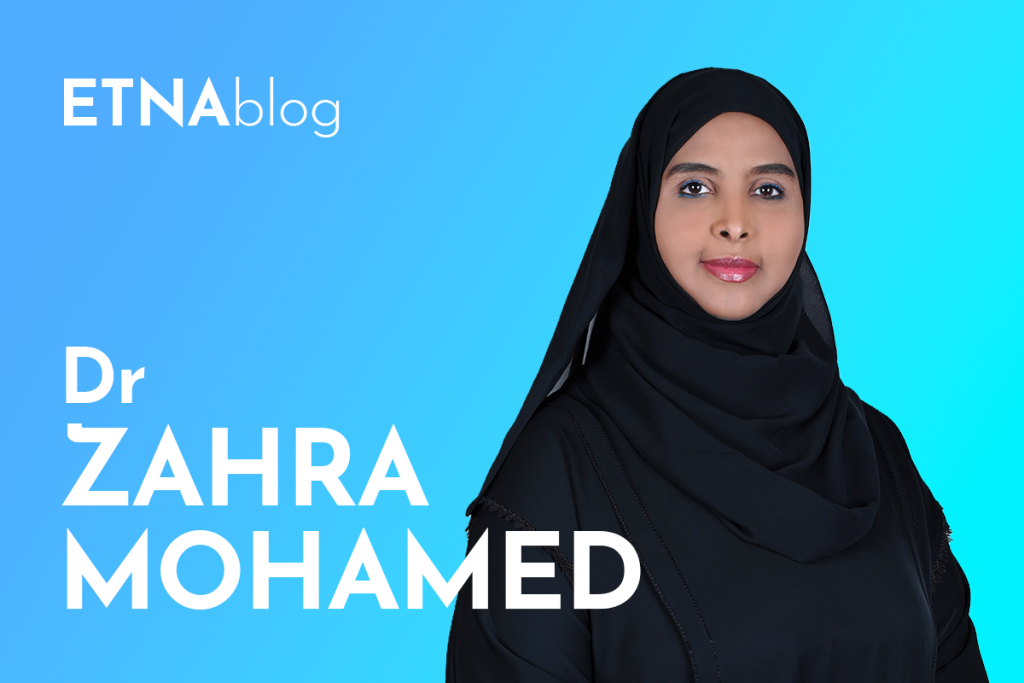
Zahra Mohamed A Mohamed, PhD, EMHCA, MSN, RN, NPD-BC, CPPS, is Associate Dean of Nursing Education at Sheikh Shakhbout Medical City in Abu Dhabi, United Arab Emirates, and Program Director of its ANCC PTAP-accredited Nurse Fellowship Program. She also leads the organisation’s ANCC Nursing Continuing Professional Development Provider Unit, which holds Accreditation with Distinction, and serves as a member of the organisational Wellbeing Council within a Magnet-recognized Hospital. Her career has progressed from bedside nursing and Clinical Resource Nurse practice to nursing education leadership. Her work and research focus on workforce transition, nurse wellbeing and retention, leadership, educational impact, psychological safety, person-centred practice, patient safety, and professional quality of life in culturally diverse healthcare environments.