
In a busy clinical setting, a patient nods in agreement as the nurse explains the treatment. It is a familiar scene. Most of the time, this is interpreted as understanding. Yet, in many cases, that nod reflects not understanding, but the appearance of understanding. This is where the problem begins.
Language barriers in healthcare are still often treated as simple communication challenges. In reality, they represent a direct patient safety risk. Misunderstandings can lead to medication errors, delayed interventions, incorrect diagnoses, and compromised informed consent. More importantly, these outcomes rarely result from a single major mistake. They emerge from the accumulation of small, unnoticed communication breakdowns. Despite this, the ability to manage language barriers remains insufficiently addressed in both nursing education and clinical practice. Keeping transcultural nursing at the level of awareness alone is no longer enough.
Language Barriers as an Invisible Patient Safety Risk
One of the most critical features of language barriers is their invisibility. An infection can be measured. A hemorrhage can be detected. But a misunderstood sentence often goes unnoticed. As a result, healthcare systems struggle to identify and manage language-related risks.
In clinical practice, professionals develop practical strategies to cope with this challenge. Speaking more slowly, simplifying sentences, or relying on gestures are common approaches. However, these strategies rarely solve the problem. Communication is not merely about simplifying language; it is about constructing meaning within context. Gestures and assumptions may create an illusion of understanding, but they do not guarantee it.
The widespread use of family members as interpreters is another example. While it may seem like a practical solution, it shifts communication into an uncontrolled space. Information may be omitted, altered, or filtered. Issues of confidentiality and ethics may arise. What appears to be communication is often only partial understanding.
Technology is increasingly presented as a solution. Translation applications and artificial intelligence tools are becoming more common. However, these tools are not yet capable of capturing the complexity of clinical communication. The issue is not simply finding equivalent words. Determining which information is critical, recognizing risk within an expression, and knowing when to intervene require clinical judgment and ethical awareness. Technology may support communication, but it cannot replace safe communication.
Language barriers are particularly pronounced among migrants and refugees. This does not only create communication difficulties but also leads to inequalities in access to healthcare. These inequalities often remain invisible because language discordance continues to be treated as an individual problem rather than a structural risk.
How Miscommunication Leads to Clinical Errors
In healthcare, miscommunication rarely causes immediate dramatic failure. It usually begins with small deviations. Over time, these deviations accumulate and manifest across different stages of care. A partially expressed symptom, a misunderstood dosage, or an overlooked warning may seem minor on their own. Together, they can result in serious clinical consequences.
Informed consent is one of the most critical areas affected by language barriers. A patient may agree to a procedure without fully understanding the information provided. While this may meet legal requirements, it is ethically insufficient. Understanding is the foundation of consent. Without it, consent cannot be considered truly valid.
The use of family members as interpreters further complicates this process. Communication is shaped not only by language, but also by relationships and roles. Patients may withhold information, censor themselves, or adapt what they say. Information may be unintentionally or intentionally modified. This affects not only the accuracy of communication but also the integrity of care.
Limited access to professional interpreters makes these risks systematic. Under time pressure, healthcare professionals often rely on the fastest available option. However, what is fast is not always safe. Furthermore, language-related errors are rarely documented as such. As a result, they remain invisible and continue to be reproduced within the system.
Beyond Translation: The Human Dimension of Language in Care
Language is not only a tool for communication. It is also a way of being. When people speak in a language other than their own, they do not simply speak less. They become someone else.
I once realized this during a conversation with a patient. He told me that in their own language, he is a very humorous and expressive person. But in the clinical setting, he felt like a completely different version of himself. He spoke less, shortened his sentences, and gave up on expressing many things. This was not just a reduction in communication. It was a withdrawal of the self. In that moment, I understood something essential: we were not hearing what the patient wanted to say, but only what they were able to say.
This distinction is critical in clinical care. Clinical assessment depends on expressed information. Yet, what remains unexpressed is often more significant. When patients cannot fully express themselves, trust weakens and participation in care diminishes.
Translation, therefore, is not merely about transferring words. It is about carrying meaning, intention, and context. The human factor is indispensable in this process. Technology may assist, but it is people who create meaning and ensure safe communication.
Rethinking Transcultural Nursing from a Patient Safety Perspective
In transcultural nursing, communication is shaped by cultural awareness, sensitivity, and compassion, principles that often find their expression beyond words. Being present with a patient, offering a reassuring smile, or placing a hand on their shoulder can convey empathy and understanding in powerful ways. These non verbal dimensions of care are essential and remain at the heart of humane nursing practice (Leininger, 1991; Watson, 2008). At the same time, culturally competent care also requires the ability to establish shared meaning. When patients cannot fully express themselves or are not fully understood, awareness and compassion need to be complemented by approaches that support clear and accurate understanding. In such situations, building shared meaning becomes central to clinical understanding and patient safety. For this reason, communication in transcultural nursing should be understood not only as a relational process, but also as a critical component of safe and effective care (Campinha Bacote, 2002; Papadopoulos, 2006).
Language barriers must be explicitly recognized as patient safety risks. Competencies to manage these risks should be integrated into nursing education. Working effectively with interpreters, recognizing ethical challenges, and ensuring safe communication in multilingual settings are essential skills.
Although healthcare professionals and interpreters are part of the same care process, they rarely share a common educational ground. This limits collaboration. Joint training approaches can help bridge this gap and improve care quality. Simulation-based education offers a particularly effective way to address these challenges.
Technological solutions should not be developed in isolation from practice. Healthcare professionals and interpreters must collaborate in designing tools that do more than translate words. These systems should be capable of understanding clinical context and remain subject to professional oversight.
Ultimately, language barriers cannot be reduced to a communication issue alone. They are directly linked to patient safety, ethical responsibility, and quality of care. The real risk lies in their continued invisibility. Making this risk visible is the first step toward meaningful change.
Take-home message:
Language barriers do not simply limit communication; they transform patients’ ability to be understood. When meaning is lost, patient safety is at risk. Making this invisible risk visible is essential for ethical and safe care.
References
Campinha-Bacote, J. (2002). The process of cultural competence in the delivery of healthcare services: A model of care. Journal of Transcultural Nursing, 13(3), 181–184. https://doi.org/10.1177/10459602013003003
About the author
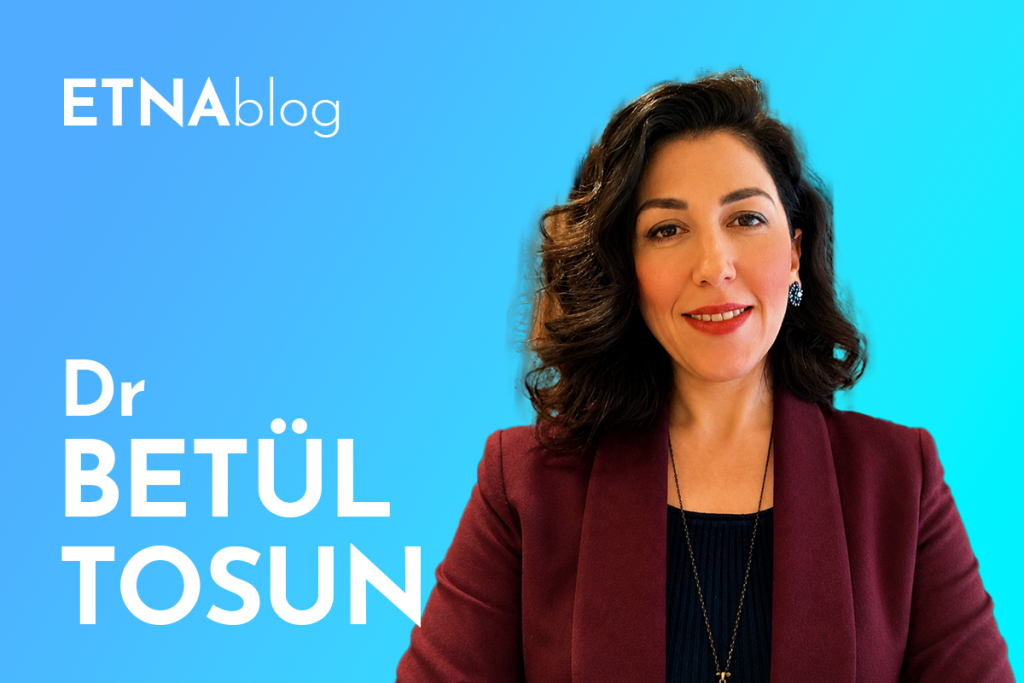
Betül Tosun, RN, PhD, is an Associate Professor at Hacettepe University, Faculty of Nursing, Department of Fundamentals of Nursing in Türkiye. Her academic work focuses on nursing education, transcultural nursing, and patient safety, with a particular interest in innovative teaching approaches. She has extensive experience in international research projects and interdisciplinary collaborations, especially within European networks. Her work brings together education, research, and clinical perspectives to support the development of safe and high-quality nursing